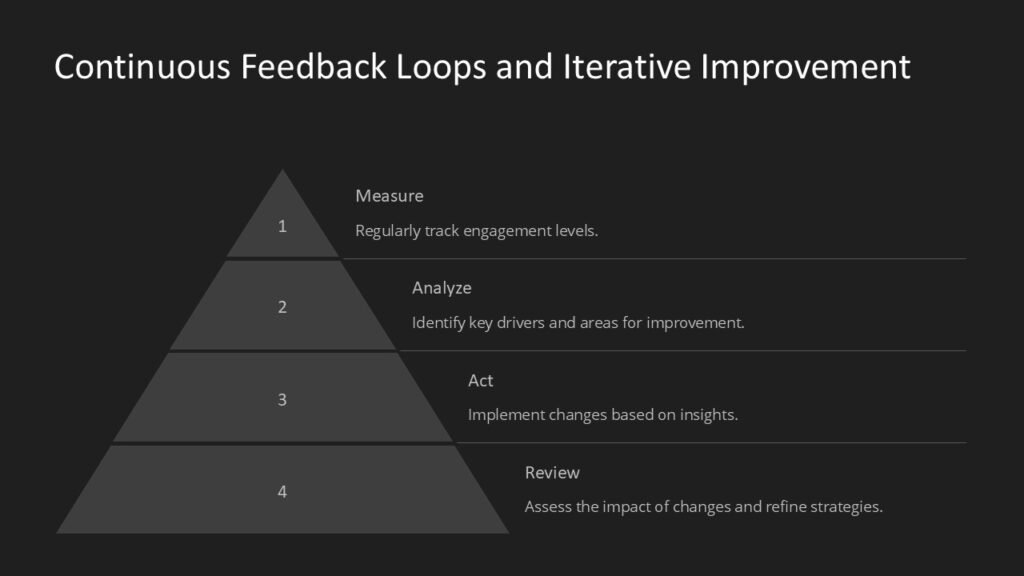
In the fast-paced world of startups and product development, one principle consistently separates the breakout successes from the 'what-ifs': the relentless pursuit of improvement fueled by Early Adopter Feedback Loops for Iterative Improvement. This isn't just a buzzword; it's a dynamic, essential cycle that transforms promising ideas into products people can't live without, ensuring you're building the right thing for the right people.
Imagine launching a product into the void, hoping it sticks. That's the old way – often leading to costly failures and missed opportunities. The smarter, more effective approach involves getting your product into the hands of its earliest, most enthusiastic users, listening intently, and then rapidly making changes. This article will show you how to master this art, turning early feedback into your most powerful engine for growth and customer loyalty.
At a Glance: Key Takeaways
- What it is: A structured, continuous cycle of gathering user input, analyzing it, making improvements, and following up.
- Why it matters: Drastically reduces time-to-market and costs, mitigates risk, builds deep customer loyalty, and accelerates product-market fit.
- Who to find: Early adopters who actively seek solutions to the problem your product solves, are optimistic, and willing to give detailed, constructive feedback.
- How to listen: Combine quantitative (surveys like NPS, CSAT, CES) and qualitative (user interviews, in-app feedback, feature voting boards) methods.
- How to act: Centralize and prioritize feedback using frameworks like RICE or MoSCoW, find patterns, and translate insights into specific development tasks.
- Don't forget to close the loop: Inform users about changes based on their input to build trust and foster loyalty (83% of customers are more loyal when companies respond to feedback).
- Avoid pitfalls: Don't just chase numbers, don't get overwhelmed, and always keep your core product vision in sight.
Why You Can't Afford to Skip Early Adopter Feedback
For decades, the "waterfall" approach dominated product development: brainstorm, build, launch, and then see what happens. This often meant spending months, even years, and millions of dollars on products that ultimately failed to resonate with users (think Google Glass or Quibi). The market moves too fast for that kind of guesswork now.
Early adopter feedback loops offer a real-time compass, guiding your product development journey. They're about continuous learning, reducing risk, and accelerating innovation. Instead of guessing, you're validating assumptions, adjusting your direction, and building a product that truly solves problems for real people. This rapid iteration helps you:
- Achieve Product-Market Fit Faster: By understanding user preferences in hours or days, not months, you pinpoint what resonates and what doesn't, allowing quick pivots or enhancements.
- Lower Development Costs: Catching flaws early can save a fortune. Fixing an issue post-launch can cost up to 10 times more than identifying it during early testing.
- Build Unshakeable Customer Loyalty: Involving users in the development process turns them into collaborators and advocates. When customers feel heard, their loyalty skyrockets – 83% are more loyal to brands that address their complaints.
- Mitigate Risk: Every feature, every design choice, becomes an experiment to be validated. This eliminates much of the guesswork inherent in new product launches.
What Exactly Are Early Adopter Feedback Loops? A Quick Primer
At its heart, an early adopter feedback loop is a structured, continuous cycle designed to refine your product. It involves four core steps: collecting feedback, analyzing trends to prioritize improvements, implementing changes, and following up with users to close the loop. This cycle isn't just a one-time thing; it's an ongoing commitment to iterative improvement.
Think of it as a scientific method for your product:
- Hypothesize: You believe a certain feature will solve a user problem.
- Experiment: You build a prototype or MVP and get it into early adopters' hands.
- Observe: You collect their feedback.
- Analyze: You interpret the data.
- Iterate: You make improvements based on what you learned.
These loops can be positive, amplifying features users already love, or negative, highlighting critical problem areas that need immediate attention. This approach is deeply rooted in agile methodologies, lean startup principles, and design thinking, all of which prioritize small, frequent experiments and a user-centric focus.
Finding Your Product Champions: Identifying and Selecting Early Adopters
The quality of your feedback directly correlates with the quality of your early adopters. These aren't just any users; they are your product champions, collaborators, and potential evangelists.
Where to Find Them
Identify where your potential users already spend their time, both online and offline.
- Social Media:
- Twitter: Ideal for tech enthusiasts, industry thought leaders, and early tech adopters.
- Instagram: Great for visually driven products (fashion, food, design).
- Facebook Groups: Niche communities dedicated to specific hobbies, industries, or interests.
- Online Forums & Communities:
- Reddit: Subreddits cater to almost any interest or problem you can imagine.
- Discourse Forums: Many software communities use Discourse.
- Indie Hackers: A hub for founders and developers, often early adopters of B2B tools.
- Review Sites:
- G2, Capterra, Clutch: Users on these sites are actively looking for and reviewing solutions.
- Crowdfunding Platforms:
- Kickstarter, Indiegogo: Excellent for hardware or unique goods, as backers are inherently early adopters willing to support new ideas.
- Professional Networks:
- LinkedIn: Essential for B2B products, connecting with professionals in your target industry.
- Real-World Interactions: Local meetups, industry events, or even co-working spaces can build trust and provide direct access.
Who to Select
Selecting the right early adopters is critical. Avoid biased friends and family; you need objective, constructive criticism. Look for individuals who:
- Already Face the Problem: They experience the core pain point your product aims to solve.
- Are Aware of the Problem: They recognize their struggle and aren't just passively accepting it.
- Actively Seek Solutions: They've likely tried other solutions or are looking for alternatives.
- Are Optimistic: They see potential beyond early flaws and aren't easily deterred by bugs or incomplete features.
- Are Willing to Provide Detailed, Constructive Feedback: They're articulate, thoughtful, and understand the value of their input.
- Represent Your Target Market: Their demographics, behaviors, and needs align with your broader customer base.
These individuals become more than just users; they become co-creators. Remember, 92% of consumers trust recommendations from friends and family – and your early adopters can become those trusted friends, advocating for your product.
The Feedback Toolkit: Smart Ways to Listen to Your Users
To get a complete picture, you need to combine both quantitative (the "what") and qualitative (the "why") approaches.
Surveys & Questionnaires
Surveys are a quick way to gather numbers and opinions, especially useful for gauging sentiment at scale.
- Net Promoter Score (NPS): Measures long-term customer loyalty and willingness to recommend.
- Customer Satisfaction (CSAT): Captures short-term impressions after specific interactions or purchases.
- Customer Effort Score (CES): Evaluates the ease of completing a specific task within your product.
Best Practices: - Keep them short: Aim for 1-3 questions to maximize completion rates.
- Trigger at key moments: Ask for CSAT after a support interaction, or CES after a critical task completion.
- Be mindful of frequency: While 78% of U.S. customers appreciate being asked for feedback, only 55% feel businesses actually act on it. Don't overdo it, but always follow up.
User Interviews
Interviews provide invaluable, deeper insights into pain points, motivations, and unmet needs, often challenging your initial assumptions. Just 5-7 well-conducted interviews can reveal up to 85% of usability issues.
Best Practices:
- Use open-ended questions: Encourage stories and detailed explanations, not just "yes/no" answers.
- Include diverse users: Ensure your interview pool represents different segments of your early adopter base.
- Consider compensation: A small gift card or product credit shows you value their time and input.
- Listen more than you talk: Let users guide the conversation and uncover their true feelings.
In-App Feedback Tools
These tools capture real-time input directly within your product, offering context-rich feedback.
- Contextual microsurveys: Small pop-ups that appear after a user completes a specific action (e.g., "How easy was it to [task] on a scale of 1-5?").
- Passive feedback widgets: A persistent "Send Feedback" button or icon that allows users to submit thoughts anytime, anywhere in the app.
- Feature voting boards: Platforms where users can suggest new ideas, vote on existing ones, and comment. This is excellent for community building and prioritizing features based on collective demand.
Turning Noise into Action: Analyzing Feedback and Driving Development
Raw feedback is just data; its value comes from how you organize, analyze, and translate it into actionable product improvements.
1. Organizing and Prioritizing
Your first step is to tame the deluge of input.
- Centralize: Consolidate all feedback into a single source of truth (e.g., a dedicated Slack channel, a CRM, a specialized feedback tool).
- Capture Consistent Metadata: Record who submitted the feedback (user type, segment), when, and which product area it relates to. This allows for powerful segmentation later.
- Tagging System: Implement clear, consistent tags (e.g., "Bug Report," "Feature Request," "UI/UX," "Navigation"). Consider hierarchical tags (e.g., "Navigation > Onboarding Flow").
- Prioritization Frameworks: Not all feedback is equal. Use frameworks to objectively decide what to tackle first:
- RICE (Reach, Impact, Confidence, Effort): Quantifies potential value against development cost.
- MoSCoW (Must have, Should have, Could have, Won’t have): Categorizes features based on necessity.
- Frequency: Prioritize issues reported most often – these are likely impacting many users.
Transforming raw user input into actionable product changes requires a robust system. First, centralize all feedback – from Slack messages to support tickets – ensuring consistent metadata like submitter type and product area. Use clear, hierarchical tags (e.g., 'Navigation > Onboarding Bug') to categorize. When it comes to prioritizing, frameworks like RICE (Reach, Impact, Confidence, Effort) or MoSCoW (Must have, Should have, Could have, Won’t have) become your best friends, helping you decide which improvements deliver the most value for the least effort. Much like understanding how subsets generate ideals in a mathematical context, effective feedback analysis involves identifying core user needs and product opportunities from a diverse, often noisy, collection of individual data points.
2. Finding Patterns
Look beyond individual comments to identify recurring themes and deeper insights.
- Group Similar Feedback: Digitally group common suggestions, bug reports, or pain points.
- Distinguish User Words from Interpretation: In interviews, pay attention to the exact language users employ, rather than immediately interpreting it through your product lens.
- Segment Feedback: Analyze feedback by user type (e.g., power users vs. new users), usage scenario, or demographic to identify specific needs. ThinkUp's AI-powered platform excels at persona mapping, ensuring feedback from your most important customer segments is prioritized.
- Cross-Reference Data: Combine qualitative "why" (from interviews) with quantitative "what" (from surveys or analytics data). For example, if many users complain about a feature being "clunky" (qualitative), check if your analytics show high bounce rates or drop-offs at that specific point (quantitative).
- Automate Tagging & Sentiment Analysis: Tools that automatically tag feedback and analyze sentiment can help visualize trends faster, making it easier to adapt to changing user needs – a critical expectation for 65% of customers.
3. Connecting to Product Development
Now, translate those insights into concrete tasks for your development team.
- Translate Vague to Specific: A user saying "the app is slow" needs to become a measurable task like "reduce login time by 1.5 seconds."
- Involve Cross-Functional Teams: Product managers, designers, and engineers should all be part of the feedback review process to ensure a holistic understanding and efficient implementation.
- Align with Product Vision: Every improvement should align with your overarching product strategy and vision. Don't blindly implement every suggestion; prioritize those that move your core mission forward.
- Allocate Dedicated Time: Dedicate a portion of each sprint or development cycle to user-driven improvements.
- Use Feature Flags: For significant changes, use feature flags to progressively roll out new functionality to small user groups before a full launch. This allows for final testing and minimizes risk.
The Crucial Last Step: Closing the Loop and Building Loyalty
This is where most companies fall short. Only 5% of companies inform users about actions taken based on their input. Yet, this final step is paramount for building trust and loyalty: 83% of customers feel more loyal when companies respond to feedback, and 86% are willing to pay more for an improved experience.
Responding to Feedback Effectively
- Acknowledge Every Piece: Even if you can't act on it immediately, acknowledge the feedback. A personalized "Thanks for your input, we're reviewing it!" goes a long way.
- Personalized Follow-Ups: For specific, detailed feedback, a personal email or message from a product manager or founder is high impact.
- Share Timelines: If you're implementing a change, share a realistic timeline for when users can expect to see it.
- Confirm Solutions: Once a change is live, follow up with the user who reported the issue to confirm the solution works for them.
- Be Transparent, Even When Saying No: Sometimes a suggestion doesn't align with your product vision or is technically unfeasible. Explain why clearly and respectfully.
- Consider Rewards: For highly valuable or detailed feedback, offer tangible rewards like gift cards, product credits, or early access to new features.
Choosing Communication Channels
Match your communication channel to the significance and audience of the update:
- Personal Email: High impact for specific requests or resolving individual pain points.
- In-App Modals/Notifications: High impact for major feature launches, encouraging immediate adoption.
- Changelogs/Release Notes: Medium impact for technical updates, builds trust and transparency, often appreciated by power users.
- Direct Calls/Demos: Very high impact for complex feedback, resolving significant negative experiences, or co-creating solutions with key users.
Sharing Product Updates Broadly
Beyond individual follow-ups, keep your entire user base informed about ongoing improvements.
- Multiple Channels: Use a combination of in-app modals for major new features, banners/tooltips for minor updates, and email campaigns for significant announcements.
- Audience Segmentation: Target updates to relevant user segments. Don't email everyone about a niche B2B feature unless it's applicable.
- Centralized Changelog: Maintain a publicly accessible changelog or "What's New" section to document your progress. This reinforces that you're actively meeting expectations – a preference for 88% of U.S. consumers.
- Post-Update Follow-Up: After an update, monitor usage and consider another quick pulse check (e.g., a CSAT survey) to ensure the changes truly meet user needs.
Making It a Habit: Setting Up Regular Feedback Reviews
To truly leverage early adopter feedback, it needs to be an embedded part of your company culture and product development lifecycle. The ACAF Framework provides a simple yet powerful structure:
- Ask for feedback regularly and systematically.
- Categorize and analyze it efficiently.
- Act on it by prioritizing and implementing changes.
- Follow up with users to close the loop and show impact.
Operationalize the loop:
- Dedicated Time: Allocate a fixed portion of each development sprint (e.g., 20%) to user-driven improvements and bug fixes.
- Progressive Rollouts: Utilize feature flags to test changes with smaller user groups before a full launch, gathering immediate validation.
- Metric Comparison: Continuously compare key product metrics (engagement, conversion, retention) before and after implementing feedback-driven changes to quantify their impact.
- Document Insights: Maintain a living document or knowledge base of all feedback insights and decisions. This prevents repeating mistakes and fosters continuous learning across the team.
Real-World Triumphs: How Iterative Feedback Transformed Products
The power of iterative feedback isn't theoretical; it's the bedrock of many of today's most beloved products.
- Airbnb: Early on, founders noticed bookings were low despite a strong platform. User feedback revealed that amateur photos of listings were a major deterrent. Their iteration? They started offering a free professional photography service to hosts, which instantly doubled bookings and dramatically improved the user experience.
- Slack: What began as a failed gaming startup (Glitch) transformed into the collaboration giant it is today because the internal team needed a better way to communicate. They iterated heavily on their internal tool, continuously gathering feedback from their own employees, leading to a pivot that created a product the world couldn't live without.
- Spotify: The music streaming leader employs a "Squad Model" – small, autonomous teams empowered to conduct weekly experiments and make data-driven decisions. This continuous feedback and iteration cycle has led to wildly popular features like "Discover Weekly" and "Wrapped," which are deeply loved by users.
Watch Out! Common Pitfalls to Avoid
While feedback loops are powerful, they're not foolproof. Be aware of these common traps:
- Over-Reliance on Quantitative Data: Numbers tell you what is happening, but not why. If you only look at analytics, you might optimize for local maximums without understanding the underlying user needs or frustrations. Always balance metrics with qualitative insights from interviews.
- Feedback Overload (Analysis Paralysis): A torrent of feedback can be overwhelming. Without a robust system for organizing and prioritizing, you risk paralysis. This is why frameworks like MoSCoW and RICE are essential. Focus on signal, not noise.
- Losing Sight of the Vision: Don't become a "feature factory" that blindly implements every user request. While users often know their pain points, they don't always know the best solution. Balance user suggestions with your core product vision and strategic goals. Your job is to interpret their needs, not just fulfill their demands.
Tools to Empower Your Feedback Loops
The right tools can streamline your feedback process, making it more efficient and insightful.
- Prototyping:
- Figma, InVision, Marvel: For creating interactive wireframes and mockups to test concepts before writing a single line of code.
- User Testing:
- UserTesting, Lookback, Maze: Platforms to conduct remote user tests, observe user behavior, and gather immediate reactions.
- Analytics:
- Mixpanel, Amplitude, Google Analytics: To track user behavior, feature usage, and conversion funnels, providing the quantitative data to complement qualitative insights.
- Collaboration & Feedback Management:
- Notion, Trello, Slack: For centralizing feedback, tracking tasks, and facilitating team communication.
- ThinkUp: An AI-powered platform specifically designed for early-stage startups to simplify feedback collection and analysis up to six times faster. Its automated categorization, sentiment analysis, and AI-writing assistants for surveys help prioritize feedback from the right users (via persona mapping) and identify real pain points. ThinkUp also connects startups with mentorship and up to $100,000 in funding, aligning feedback-driven improvements with business goals and market validation.
The future of feedback-driven development is increasingly reliant on AI-powered insights (e.g., MonkeyLearn for sentiment analysis), integrated DevOps pipelines that allow for continuous deployment of iterative changes, and comprehensive Voice of Customer (VoC) platforms that unify all feedback channels.
Your First Step: Starting Small and Building Momentum
Don't feel overwhelmed by the comprehensive nature of early adopter feedback loops. The best way to start is small and build momentum.
Pick one core assumption about your product or a single feature you're considering.
- Prototype: Spend two days (or less) creating a low-fidelity prototype (even just sketches or a click-through mock-up).
- Test: Share it with five targeted early adopters.
- Listen: Conduct short interviews, observe their interactions, and gather their initial reactions.
- Iterate: Take those insights and make one small improvement.
This isn't just about building better products; it's about building a learning organization. By embedding early adopter feedback loops into your DNA, you'll not only outmaneuver competitors but also cultivate a loyal community that feels invested in your success. Start listening, start learning, and start iterating – your future customers will thank you for it.