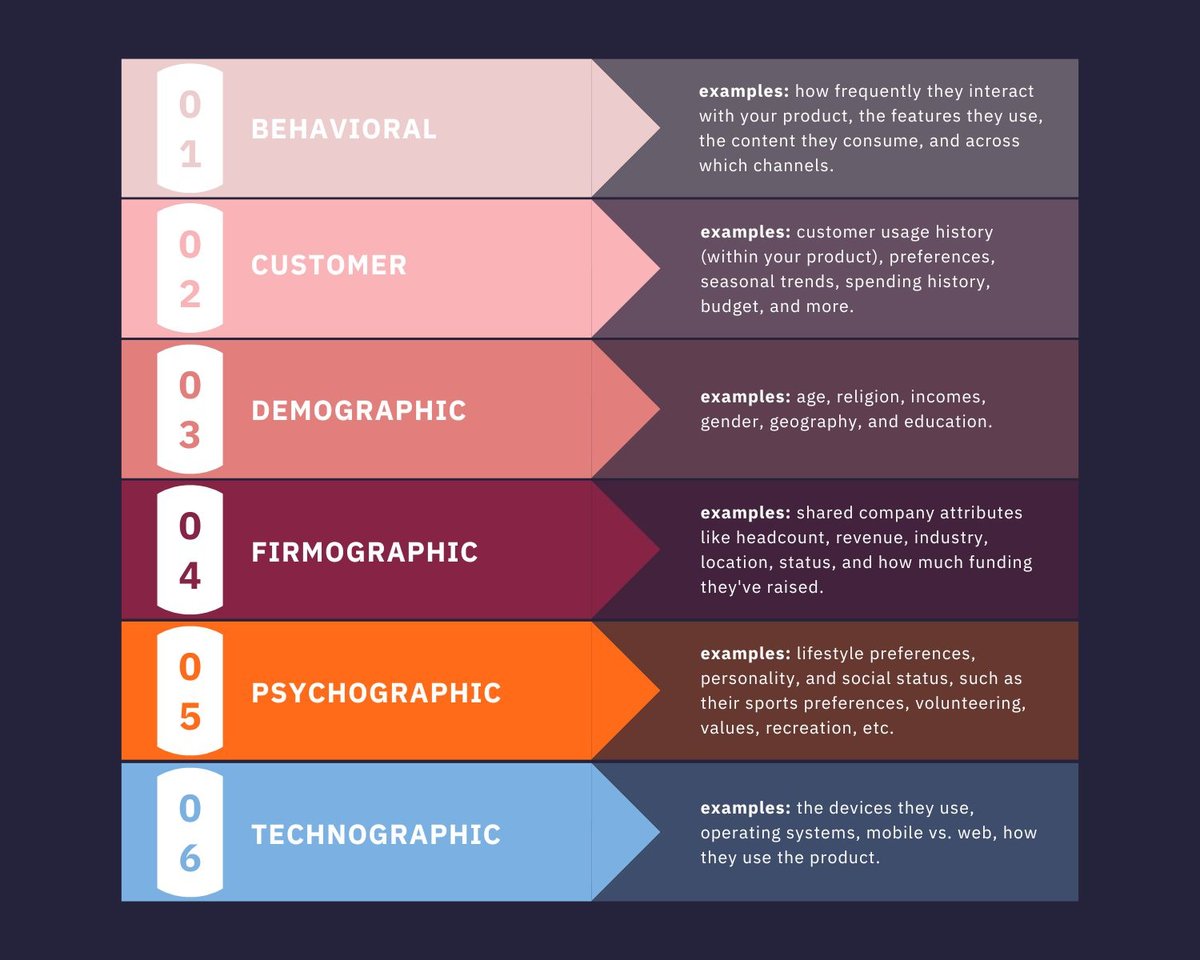
When you build products for everyone, you often build for no one. That's why User Segment-Driven Feature Ideation isn't just a buzzword; it’s the bedrock of creating products that resonate deeply, solve real problems, and achieve lasting success. It’s the difference between a product that gathers dust and one users can’t imagine living without. This approach moves beyond generic brainstorming, diving deep into the unique needs, pain points, and aspirations of specific user groups to conceive features that hit the bullseye every time.
At a glance: Why Segment-Driven Feature Ideation Matters
- Move beyond assumptions: Stop guessing what users want; start knowing.
- Focus resources wisely: Invest in features that deliver high impact for defined user groups.
- Boost user adoption & loyalty: Build features that feel tailor-made.
- Gain a competitive edge: Differentiate your product by solving specific, overlooked problems.
- Streamline development: Clear segment insights lead to better-defined features and less rework.
- Innovate purposefully: Generate truly innovative product ideas that address real-world challenges.
Beyond the Buzzword: What User Segment-Driven Feature Ideation Really Means
At its heart, User Segment-Driven Feature Ideation is about intentionality. It's the disciplined process of generating, refining, and prioritizing new product features based on a profound understanding of distinct user groups, or "segments." Instead of just asking, "What should we build next?", you're asking, "What challenge can we solve for this specific type of user that will make their life significantly better?"
Think of it like a bespoke tailor versus a ready-to-wear clothing store. Both offer clothes, but the tailor crafts garments to the exact measurements, preferences, and lifestyle of an individual. User segment-driven ideation aims for that same level of tailored fit, ensuring each new feature isn't just "nice to have," but essential for a specific subset of your audience. This precision allows you to not only meet expressed needs but also uncover unarticulated desires, fostering deeper engagement and loyalty.
The Peril of Generic Products: Why Traditional Ideation Often Misses the Mark
For years, many product teams approached feature ideation like a scattergun: throw enough ideas at the wall and see what sticks. This often led to a grab bag of features that sounded good on paper but failed to deliver real value. Why? Because they lacked a clear target.
- Wasted Resources: Building features for a "general user" often means you're not building a truly compelling feature for anyone. Development time, money, and effort go into features with low adoption rates or minimal impact.
- Feature Bloat: Without a clear focus, products can become overloaded with features, making them complex, confusing, and difficult to navigate. Users get lost in the noise, unable to find what they truly need.
- Lack of Differentiation: If you're building what everyone else is building, or what you think everyone wants, you're not standing out. Generic features lead to generic products in a crowded market.
- User Disengagement: When features don't directly address a user's specific pain points or aspirations, they simply won't use them. This leads to low engagement, churn, and a missed opportunity to build a loyal user base.
- Slow Innovation: Without a targeted approach, innovation can be slow and reactive. You're constantly playing catch-up or making incremental improvements rather than creating breakthrough solutions for specific, high-value segments.
Segment-driven ideation addresses these pitfalls head-on. By narrowing your focus, you sharpen your product's edge, ensuring every feature serves a purpose for a defined set of users.
Laying the Foundation: Understanding Your Segments (Before You Ideate)
You can't build for a segment you don't know. The crucial first step in segment-driven ideation isn't about features; it's about deep user empathy. This means identifying, defining, and truly understanding your user segments. A segment isn't just a demographic group; it's a group of users who share common needs, behaviors, motivations, and pain points related to your product or the problem it solves.
How to Truly "Know" Your Segments
Start by answering fundamental questions about your existing or potential users:
- Who are they? (Demographics, roles, professional backgrounds)
- What do they need? (Goals they're trying to achieve)
- What problems do they face? (Pain points, frustrations, unmet desires)
- What are their current behaviors? (How do they currently solve their problems, what tools do they use?)
- What motivates them? (What drives their decisions, what do they value?)
- What hinders them? (Barriers to adoption, trust issues, technical limitations)
Leverage various sources to build these segment profiles: - Customer Interviews & Surveys: Direct conversations are gold. Ask open-ended questions about their workflows, challenges, and aspirations.
- Behavioral Analytics: Observe how users interact with your existing product. Which features do they use? Where do they drop off? How to effectively use analytics data can reveal surprising segment behaviors.
- Market Research: Understand broader trends, industry shifts, and competitive offerings. This helps you identify gaps and new opportunities. For instance, understanding the benefits of comprehensive market research can reveal how competitor products are (or aren't) serving specific niches.
- Sales & Support Teams: These frontline teams have invaluable insights into user challenges and common requests.
- User Personas: Create detailed, fictional representations of your key segments. Give them names, backstories, goals, and pain points. These personas act as a compass throughout the ideation process.
- Empathy Maps: Visualize what your users "think and feel," "see," "say and do," and "hear." This helps your team step into their shoes.
Without this robust understanding, any feature ideation risks being built on assumptions, leading to features that are technically sound but strategically irrelevant.
The Five Pillars of Segment-Driven Feature Ideation
Once you have a clear picture of your user segments, you can embark on a structured, segment-focused ideation journey.
1. Generating Ideas That Speak to Specific Needs
This isn't just about brainstorming; it's about targeted inspiration. Instead of asking "What can we build?", ask "Given [Segment A]'s specific pain point [X], how might we solve it?" or "What opportunity does [Segment B]'s current workflow present?"
- Segment-Specific Pain Point Analysis: Review your user research for each segment. List their top 3-5 pain points. For each pain point, brainstorm solutions.
- User Story Workshops: Frame ideas as user stories: "As a [type of user/segment], I want [some goal] so that [some reason/benefit]."
- Competitive Analysis with a Segment Lens: Look at competitors. What features do they offer? How do your specific segments react to those features? Are there gaps? This helps you identify market opportunities for your unique segments.
- "Jobs-to-Be-Done" Framework: For each segment, identify the "job" they're trying to get done. Features are merely tools to accomplish those jobs. For example, a "student" segment might have a job of "organize my research notes efficiently."
- Leverage Existing Feedback: Dive into support tickets, app reviews, and social media mentions filtered by segment. What are different groups saying?
Remember, the goal here is quantity within the context of a segment. Don't censor ideas yet; capture everything.
2. Refining Ideas with a Segment Lens
Now you have a pile of segment-driven ideas. It's time to sharpen them. This phase involves scrutinizing each idea through a series of critical questions, always keeping your target segment in mind.
- Segment Alignment: Does this feature truly solve a problem or unlock an opportunity for this specific segment? How critical is it to them?
- Value Proposition: What unique value does this feature offer to the segment? How does it make their life easier, better, or more efficient?
- Technical Feasibility: Can we actually build this? Do we have the technology, resources, and expertise?
- Business Impact: How does this feature contribute to our overall business goals (e.g., revenue, retention, acquisition for this segment)?
- Product Vision Alignment: Does this feature fit into the long-term vision and core value proposition of your product? Does it support Understanding ideal generated by a subset as part of the whole product?
- Resource Requirements: What will it take to build and maintain this feature (time, money, people)?
- Competitive Advantage: How does this feature differentiate us from competitors for this segment?
Group similar ideas, flesh out the strongest ones with more detail, and discard those that don't align with segment needs or strategic goals.
3. Prioritizing for Maximum Segment Impact
You can't build everything. Prioritization is where you decide which segment-driven features to tackle first, ensuring you maximize impact and value. This is where you connect the refined ideas with your overarching product strategy.
- Impact vs. Effort Matrix: Plot features on a grid based on their expected impact for the target segment (high/low) and the effort required to build them (high/low). Focus on high-impact, low-effort features first.
- RICE Scoring: A popular framework (Reach, Impact, Confidence, Effort) can be adapted. Assign scores for each for a specific segment.
- Reach: How many users in the target segment will this feature affect?
- Impact: How much will this feature help the target segment achieve their goals?
- Confidence: How confident are we in our estimates for Reach and Impact for this segment?
- Effort: How much work is required from your team?
- MoSCoW Method: Categorize features as Must-have, Should-have, Could-have, Won't-have (for a specific release). This is particularly useful when prioritizing for a specific segment's immediate needs.
- Weighted Scoring: Assign weights to different criteria (e.g., segment adoption, business value, technical risk) and score each feature accordingly.
In every prioritization discussion, a representative for the target segment (or the persona itself) should be metaphorically present at the table.
4. Prototyping: Bringing Segment Insights to Life (Quickly)
Once you've prioritized, it's time to move from abstract ideas to tangible representations. Prototyping allows you to quickly visualize and interact with feature concepts, translating segment insights into a user experience. The key here is to build just enough to learn, not to launch.
- Sketching & Wireframing: Start with low-fidelity sketches or digital wireframes to map out the user flow and basic interface for the segment.
- Mockups: Add more visual detail with mockups, incorporating branding and design elements.
- Interactive Prototypes: Use tools like Figma, InVision, or Adobe XD to create clickable prototypes that simulate the user experience. This allows your target segment to "try out" the feature before any code is written.
- Focus on the Core Segment Use Case: Don't try to prototype every edge case. Build out the most critical path for your primary segment to validate the core value proposition.
This iterative process helps you quickly gather initial feedback and refine the feature design, ensuring it truly meets the segment's needs before committing significant development resources. It's a key part of strategies for validating product concepts without costly mistakes.
5. Testing with Your True Audience: The Feedback Loop
The ultimate validation comes from putting your prototypes (and later, MVPs) in front of the actual target segments. This isn't just about finding bugs; it's about confirming that the feature delivers the intended value and user experience.
- Usability Testing: Observe target users interacting with your prototype or early version of the feature. Pay close attention to their struggles, successes, and overall emotional response.
- A/B Testing: For existing products, test different versions of a feature with different subsets of your target segment to see which performs better on key metrics.
- Beta Programs: Invite a small, representative group from your target segment to use a pre-release version of the feature. Gather their feedback through surveys, interviews, and usage data. This is one of the most effective user testing methods.
- Focus Groups (Segment-Specific): While not for primary validation, segment-specific focus groups can help uncover deeper sentiments and gather qualitative feedback on emotional resonance.
- Iterate, Iterate, Iterate: The feedback loop doesn't end after one test. Use the insights gained to refine the feature, re-prototype if necessary, and test again. This agile approach ensures continuous improvement based on real user input.
This final pillar is non-negotiable. Skipping it is like building a custom suit without ever having the client try it on for fit.
Powerful Techniques for Segment-Focused Ideation
While the five pillars provide a framework, various techniques can inject creativity and rigor into each stage. Here are some that particularly shine when applied with a segment-driven mindset:
- User Journey Mapping (Segment-Specific): Visualize the current or ideal journey of a specific user segment as they interact with your product or try to achieve a goal. This helps identify pain points, opportunities, and emotional highs/lows at each touchpoint, sparking ideas for features that enhance that segment's experience.
- Role-Playing as a Segment Member: Have your team physically act out scenarios from the perspective of a specific user persona. What are their frustrations? What actions do they take? This immersive exercise builds empathy and often reveals nuanced feature ideas.
- Outside-In Thinking: Instead of starting with what your product can do, start with the external world of your user segment. What are their real-world problems? What tasks do they need to accomplish outside your product? How can your product be the bridge?
- Data-Driven Decisions (Segment Analytics): Use your analytics to understand how different segments behave. Are certain segments dropping off at a particular point? Are there power users in one segment that could benefit from advanced features? Diving into how to effectively use analytics data for specific segments can uncover powerful insights.
- Collaborative Ideation with Users: Directly involve representatives from your key segments in workshops or co-creation sessions. They are the experts on their own needs and can provide invaluable insights and even generate feature ideas themselves.
- SCAMPER Technique (Through a Segment's Eyes): Apply SCAMPER (Substitute, Combine, Adapt, Modify, Put to another use, Eliminate, Reverse) to existing features or competitive offerings, but always asking: "How would a specific segment benefit if we [substitute/combine/adapt] this?"
- Analogy Thinking for Segment Problems: Look at how completely unrelated industries or products solve problems similar to those faced by your target segment. Can you adapt their solutions to your product? This pushes you beyond conventional thinking.
Avoiding the Pitfalls: Common Traps in Segment-Driven Ideation
Even with the best intentions, it's easy to stumble. Be mindful of these common pitfalls:
- Segment Myopia: Focusing too narrowly on one segment and ignoring how a feature might impact or alienate other valuable segments. A holistic view, considering the entire product ecosystem, is vital.
- Analysis Paralysis: Getting bogged down in endless research and analysis without ever moving to ideation or execution. You need enough information to make informed decisions, but not so much that you never act.
- Ignoring Business Goals: While user segments are paramount, features must also align with your overarching business objectives (e.g., profitability, market share). A feature that delights a segment but bankrupts the company isn't sustainable.
- Static Segments: User needs and behaviors evolve. Segments are not static. Regularly revisit and refine your segment definitions and personas based on new data and market shifts.
- Confirmation Bias: Only seeking out and prioritizing feedback or data that confirms your pre-existing assumptions about a segment or feature. Actively seek disconfirming evidence.
- Over-promising and Under-delivering: Building features that don't quite meet the expectations set during the ideation phase, leading to user disappointment. Be realistic about what can be achieved.
Measuring Success: How Do You Know You Got It Right?
The ultimate test of segment-driven feature ideation lies in its impact. How do you measure success?
- Segment-Specific Adoption Rates: Is the target segment actually using the feature? Are the adoption rates high within that specific group?
- Feature Usage & Engagement: Are segments using the feature frequently? Are they spending more time in the product because of it?
- Segment-Specific Retention & Churn: Has the feature improved retention for the target segment, or reduced their churn rate?
- Customer Satisfaction (CSAT/NPS) from Segments: Are users in the target segment reporting higher satisfaction or Net Promoter Scores?
- Qualitative Feedback: Conduct follow-up interviews and analyze support tickets to understand the sentiment and perceived value from the target segment.
- Business Metrics: Ultimately, features should drive business outcomes. Does the feature lead to increased conversions, revenue, or efficiency for the specific segment it serves?
By tying feature success directly back to the segment it was designed for, you gain clear, actionable insights into what truly works and what needs further iteration.
Your Next Steps: Building Products That Truly Connect
User Segment-Driven Feature Ideation is more than a methodology; it's a mindset. It's about shifting your perspective from building features to solving problems for specific people.
Start small. Pick one well-defined segment and apply these principles to your next feature idea. Invest time in truly understanding that group's world. Let their challenges guide your brainstorming, their needs inform your designs, and their feedback shape your final product.
The payoff? Products that aren't just functional, but genuinely loved. Products that build loyal communities. Products that stand out in a crowded market because they were built for someone specific, with intention and empathy. It’s a journey of continuous learning, but one that promises to transform your product development from a guessing game into a strategic, user-centered engine of innovation. Take the leap, and watch your product connect with users in ways you never thought possible.